
High School NIL Rules: What Athletes and Parents Should Know Before Signing a Deal
High School NIL can create real opportunities for student-athletes, but a paid social-media post, local endorsement, camp appearance, or merchandise deal can also put athletic eligibility at risk if it is handled incorrectly.
The most important point: there is no single national rule for High School NIL. Rules are set largely by state high school athletic associations, and schools or districts may impose additional restrictions. Before you sign, post, accept payment, or promote a brand, you need to understand the rules that apply to you.
Following is a guide that covers High School NIL.
What Is High School NIL?
NIL stands for name, image, and likeness. It refers to compensation an athlete receives for the commercial use of their personal identity or brand, not payment for participating in a sport.
Common NIL opportunities include:
Paid social-media posts
Local business endorsements
Autograph sessions or appearances
Camps, clinics, and private lessons
Merchandise or apparel partnerships
Trading cards and memorabilia
Podcast, YouTube, or creator revenue
Modeling and advertising work
A local sporting-goods store paying an athlete to promote a product may be a legitimate NIL opportunity. A booster paying that athlete for every touchdown, or to attend a particular school, is far more likely to create an eligibility issue.
Is High School NIL Allowed?
In most states, some form of High School NIL is permitted. But “permitted” does not mean unrestricted.
As Indiana’s new personal-branding rule took effect for the 2026-27 school year, it became the 46th state, plus the District of Columbia, to allow high school athletes to sign NIL deals. To date, Alabama, Hawaii, Mississippi, and Wyoming all prohibit high school NIL.
Texas is a major exception. Its rules do not operate like broad commercial NIL permission. As of May 2026, athletes younger than 17 cannot sign deals. The state also has more limited rules for prospective college athletes.
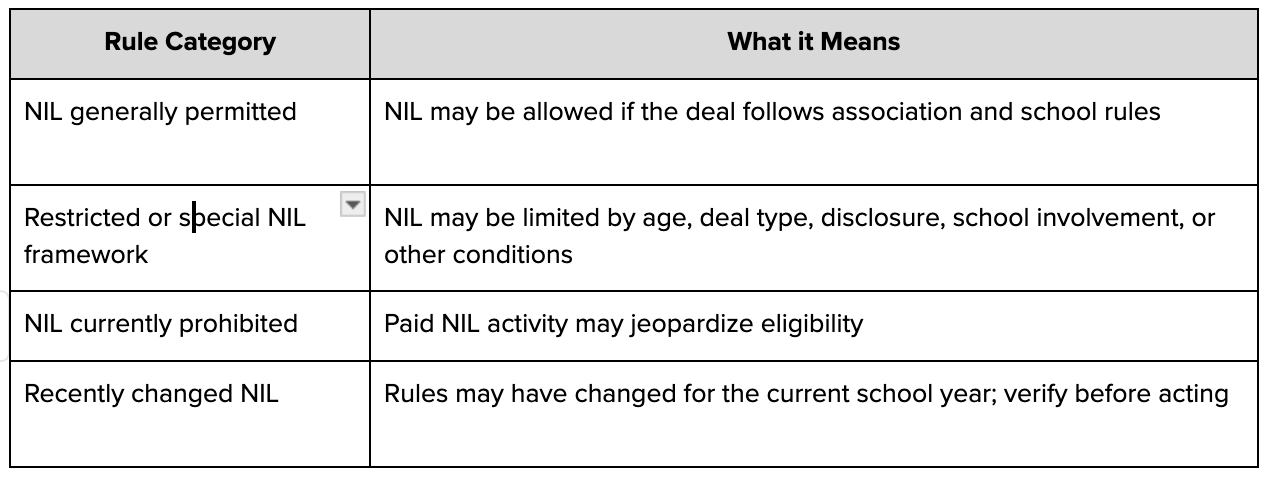
High School NIL status at a glance:
Even where NIL is allowed, families should never assume that a college NIL rule, a state statute, or a social-media post about another athlete applies to their situation.
The Rules That Matter Most
State associations generally recognize that athletes have personal branding rights. At the same time, they often draw a clear line between an athlete’s individual identity and their school sports participation.
Before accepting an NIL opportunity, review these common restrictions.
School Logos, Uniforms, and Facilities
Many high school associations prohibit athletes from using:
School names or mascots
Team uniforms or logos
School facilities
Official team photos
School social-media accounts
Other school intellectual property
Your name, image, and likeness belong to you. A school’s trademarks, uniforms, and facilities do not automatically come with that right.
Pay-For-Play
NIL should compensate an athlete for actual promotional work, appearances, content, or licensing rights. It should not be payment for athletic results.
Red flags include compensation tied to:
Points, goals, touchdowns, wins, or statistics
Playing time or a starting role
Awards or championships
Making a roster
Continuing to play for a particular program
Recruiting Inducements
A deal should not function as payment to enroll at, remain at, or transfer to a particular high school.
That includes arrangements involving boosters, coaches, collectives, or third parties that appear connected to a school-recruiting decision. Even where a state permits NIL, this type of arrangement can create serious eligibility concerns.
Prohibited Sponsors
Rules vary by state, but many associations restrict NIL relationships involving:
Alcohol
Tobacco or nicotine products
Cannabis
Gambling or sports betting
Adult entertainment
Firearms
Performance-enhancing drugs
Products or businesses that conflict with school policies
The sponsor matters as much as the payment.
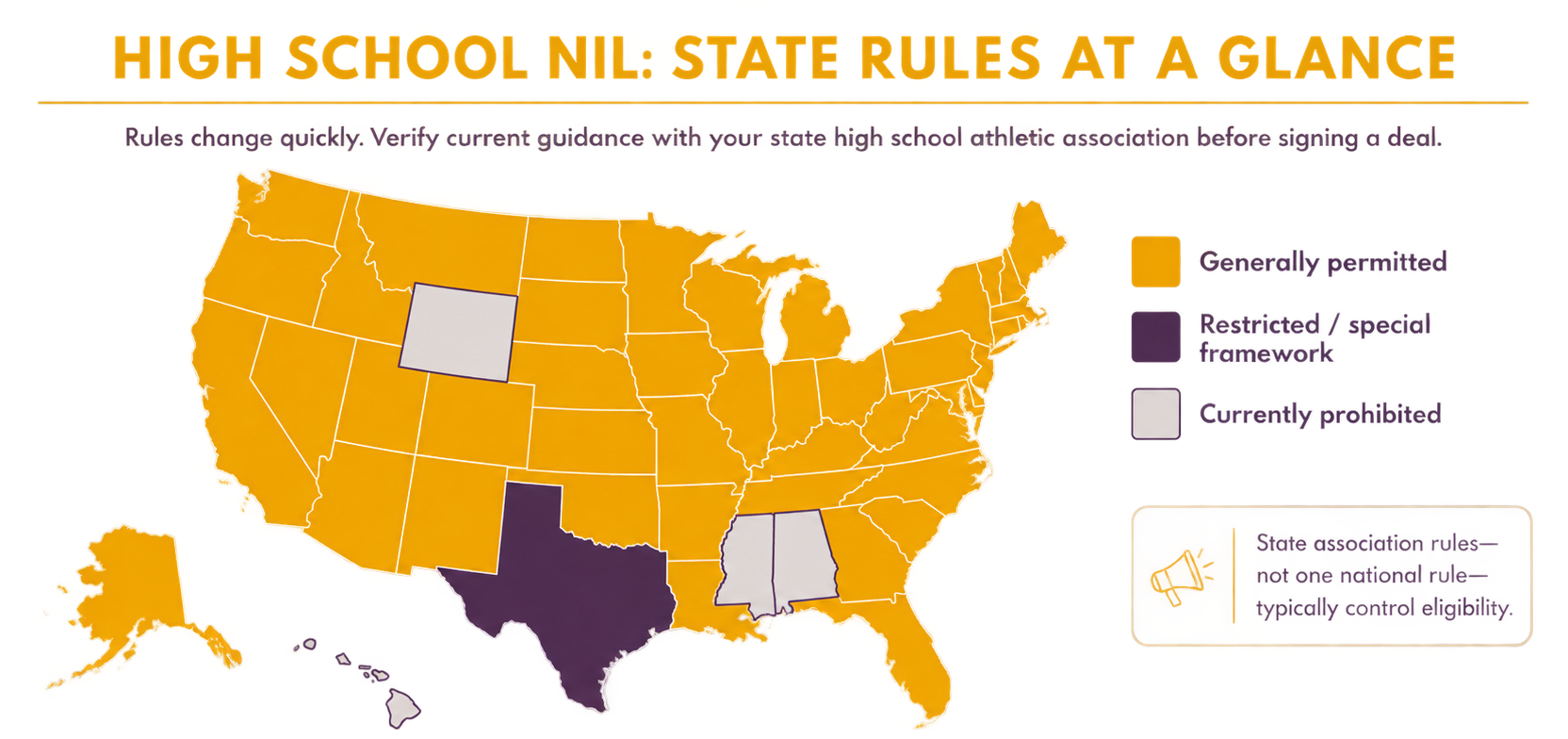
A state-by-state breakdown of High School NIL, as of September 2026
Before You Sign: A Parent-and-Athlete Checklist
A High School NIL agreement is not just a marketing opportunity. It is a contract often involving a minor, personal rights, school eligibility, and potentially future college opportunities.
Before signing, take these steps:
Identify your governing association. Find your state high school athletic association’s current NIL policy.
Check your school and district rules. Your school may have added restrictions, approval requirements, or activity policies.
Confirm the deal is allowed. Ask whether the sponsor, product category, payment structure, and deliverables comply with applicable rules.
Remove school intellectual property. Do not assume you can wear a uniform, use a school facility, name your team, or include a logo in sponsored content.
Confirm it is not pay-for-play. Compensation should not be tied to athletic performance, participation, or recruiting.
Ask about disclosure. Some states require athletes to disclose an agreement before signing or within a specific period afterward.
Involve a parent or guardian. A parent or guardian should review every agreement before it is signed.
Keep records. Save contracts, emails, messages, invoices, payments, posts, and disclosure confirmations.
Consider tax and privacy issues. NIL income may create tax obligations. Public brand activity can also expose a minor’s personal information, location, and schedule.
Get help before a problem develops. If eligibility, recruiting, contract terms, or school involvement are unclear, seek advice before posting or accepting payment.
Contract Terms Families Should Understand
NIL contracts are often short, but a few sentences can grant a company broad control over an athlete’s likeness. Families should know what they are agreeing to.
Pay close attention to the following words and ask yourself the following questions:
Compensation: Is payment cash, products, commissions, travel, or something else of value?
Deliverables: How many posts, appearances, videos, or promotions are required?
Term: How long does the agreement last?
Exclusivity: Does the athlete lose the ability to work with competing brands?
Content ownership: Who owns the photos, videos, and posts?
Usage rights: Can the brand reuse the athlete’s content in advertising? For how long?
Termination: Can the athlete or family end the agreement if circumstances change?
Morals clauses: Does the sponsor have broad discretion to end the deal?
Indemnity: Does the agreement place unreasonable legal or financial risk on the athlete or family?
Privacy: Does the agreement require personal information, locations, school schedules, or direct access to accounts?
A good NIL opportunity should be clear about what the athlete must do, what the athlete will receive, and when the arrangement ends.
NIL, Recruiting, and College Sports
High School NIL and college NIL are related, but they are not the same system.
The NCAA does not directly govern most High School NIL activity. State associations, schools, and districts usually determine high school eligibility rules.
That means a deal that is allowed in one state may be prohibited in another. It also means a high school NIL deal may need to be reviewed again when an athlete enrolls in college.
Families should be particularly careful when a deal involves:
A college or college-affiliated entity
A collective or booster group
A recruiting decision
An agent or representative
A long-term use of the athlete’s image
A promise of future compensation
NIL should support but not complicate an athlete’s long-term academic and athletic goals.
The Bottom Line
High School NIL can help athletes build experience, learn business skills, and benefit from the value of their personal brand. But the safest approach is simple: verify the rules, review the agreement, and protect eligibility before accepting the opportunity. We represent student-athletes and families navigating NIL agreements, eligibility issues, recruiting concerns, and other sports-law matters. If you have received an NIL offer or have questions about a proposed arrangement, contact our team before you sign.
