
Sportico: Navy Baseball Player Accuses NCAA of Harming Active-Duty Readiness
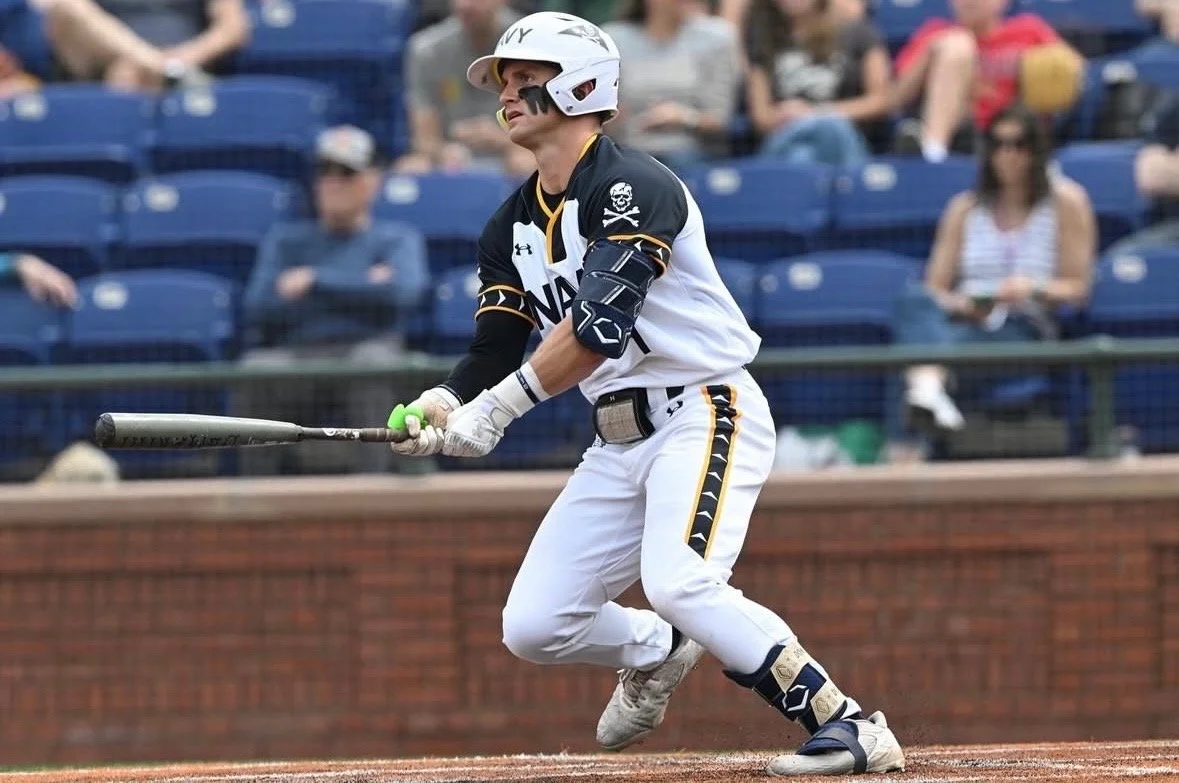
Christine Brown was quoted in story originally published in Sportico, about a case she is involved in.
By Daniel Libit
A federal court in Maryland is set to hear arguments Thursday on a temporary restraining order motion in a uniquely framed NCAA eligibility lawsuit filed by Navy baseball player Brock Murtha. The college senior was denied a waiver last spring, which the Naval Academy has since said stemmed largely from errors its athletics department made in filing its petition.
Murtha is seeking a fifth year of eligibility to compete in the current college baseball season, now three weeks underway, before he is scheduled to commission as a Marine Corps officer in May. He says his decision to transfer to Navy from Notre Dame in 2022 was based largely on assurances from the academy that he would retain four full years of athletic eligibility.
Unlike most of the dozens of athlete eligibility lawsuits filed over the past year—typically focused on players’ financial or professional considerations—Murtha frames his case as one of broader implications, including that of national security.
“A lot of these cases are just about athletes extending their careers, whether for higher draft stock or maybe to get compensated more down the road,” Murtha told Sportico in a telephone interview this week. “For me, I have a mandatory hard cap on my career. There is no playing later or transferring next year. So, I feel the NCAA is effectively truncating the professional development of a future military officer.”
During a status hearing last week, U.S. District Judge Julie Rebecca Rubin indicated her intention to rule on Murtha’s TRO motion from the bench Thursday. If granted, and pending the Patriot League’s sign-off, Murtha could join the 7-3 Midshipmen as soon as Friday for the start of their home series against Dartmouth.
Murtha’s ordeal highlights how athletes must rely on their universities—and, specifically, their schools’ athletic compliance officers—to accurately interpret, communicate and facilitate the NCAA eligibility process. What remains unclear, however, is the degree to which Navy’s admitted errors actually prevented Murtha from competing this season. Murtha, a native of Sayville, N.Y., says he remains largely in the dark about the association’s rationale for continuing to deny his eligibility.
On Feb. 10, the association sent a terse letter to Navy senior associate AD Loretta Lamar, issuing its final denial of the school’s multiple requests for Murtha to be able to appeal his case, after failing to do so within the required 30-day window after it was first rejected. Ten days later, Murtha filed a federal breach-of-contract lawsuit against the NCAA, seeking damages and an injunction. In his complaint, he argues that the NCAA’s refusal to reconsider harms him not only as a current athlete but, more importantly, as a future military officer.
“The harm I am facing is not the loss of ‘fun’ or ‘games,’” Murtha wrote in a declaration attached to his civil complaint. “It is the loss of critical leadership reps that are essential to my ability to lead Marines in high-consequence environments. Once I commission in May, these opportunities are gone forever. No monetary award can replace the professional competence and compassion I am losing every single day I am held off that field.”
On Monday, the NCAA filed a motion opposing the TRO on procedural grounds, arguing the U.S. District Court in Maryland lacks diversity jurisdiction, as the unincorporated NCAA shares Murtha’s state citizenship. An NCAA spokesperson did not respond to an email seeking comment.
Murtha is being represented by attorney Christine Brown, a prominent Title IX and NCAA eligibility lawyer who has advocated for allowing athletes—rather than schools—to file eligibility waivers. “This mistake would never have happened if Brock had been able to file it himself,” Brown, who is representing Murtha pro bono, said in a telephone interview.
Despite basing his legal challenge on Navy’s oversights, Murtha insists he bears no resentment towards the academy, which he called “my biggest advocate.”
Navy athletics director Michael Kelly told Sportico the school continues to support Murtha and has exhausted all of its options to preserve his eligibility this season, but declined further comment.
By contrast, Murtha holds a much more jaundiced view of the NCAA, accusing the organization of deliberately undercutting his request. “They are betting I would just give up and are using the calendar as a weapon to avoid dealing with the merits of this case,” Murtha said.
Murtha transferred to Navy ahead of the 2023 baseball season after competing at Notre Dame during the COVID-impacted 2020-21 campaign, where he appeared in six games. The NCAA later determined that one of those appearances occurred after the season’s halfway point, thus counting the year against his total athletic eligibility.
On Jan. 5, Navy sent the NCAA an “institutional letter of responsibility” seeking reconsideration of Murtha’s appeal under the association’s “new information” standard. In the letter, Navy reiterated that it had erred in having mischaracterized Murtha, a reserve infielder, as a closing pitcher for Notre Dame and misstating the timing of his “last substantive participation” for the Fighting Irish.
Per Murtha’s lawsuit, he entered five games as a defensive replacement, never playing more than one inning, and logged a single at-bat late in a game for his sixth appearance. His final action came in the 20th contest of Notre Dame’s 47-game season, which included its postseason run to the Super Regional.
Building on that timeline, Navy wrote to the NCAA in January that Murtha’s limited participation occurred early enough in the season to fall within the range the NCAA has traditionally considered appropriate for granting season-of-competition waivers.
While Navy’s athletics compliance office notified Murtha of the denial on March 31, 2025, the academy has said he was not given the underlying documents or presented with the appeal notice until May 20, 2025—after it was too late.
In his declaration, Murtha described the mental toll of pursuing a fifth year of eligibility.
“While my peers are sleeping or studying, I am awake until the early morning hours researching NCAA litigation,” he wrote. “I have missed portions of my academic day to speak with counsel. This constant state of legal survival led to my lowest semester GPA in four years this past fall. The sleep deprivation and mental exhaustion are not merely ‘stress’—they are a direct result of the NCAA’s refusal to provide a fair process, and they are actively degrading my readiness for the fleet.”
That concern, he told Sportico, has become only more acute in light of the U.S. military action in Iran.
“We are definitely in a time of conflict, and me and my fellow midshipman will be thrown right into fight right away,” Murtha said. “It is so unpredictable right now, we don’t know where we are going to end up and what we are doing—we just need to be as prepared as possible. This year, baseball is not just about a fifth year but about a final semester of preparation.”